
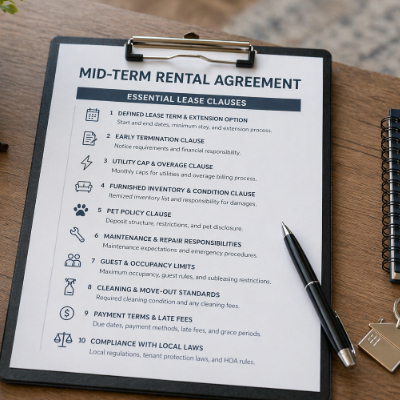
Mid-term rentals (typically 8–13 weeks) require lease structures that differ from traditional 12-month agreements and short-term vacation contracts.
Travel nurses and contract professionals value clarity and predictability.
Landlords need protection for furnished property and utility exposure.
A strong mid-term lease balances both.
Here are the essential clauses every landlord should include.
1. Defined Lease Term & Extension Option
Mid-term rentals often align with work contracts.
Your lease should clearly state:
-
Start date
-
End date
-
Minimum stay requirement
-
Extension process
Include language outlining:
-
How far in advance tenants must request an extension
-
Whether rent adjusts during extension
-
Whether the lease automatically converts to month-to-month
Clarity reduces vacancy gaps and last-minute disputes.
2. Early Termination Clause
Healthcare contracts sometimes change.
Include language covering:
-
Early departure procedures
-
Required written notice (commonly 30 days)
-
Financial responsibility during notice period
-
Whether deposits are forfeited
This protects income stability while remaining reasonable.
3. Utility Cap & Overage Clause
Utilities included in furnished rentals should never be undefined.
Specify:
-
Monthly electricity cap
-
Water usage expectations
-
Internet included details
-
Overage billing process
Mid-term tenants typically use utilities normally, but written caps prevent extreme usage scenarios.
Also clarify:
-
Electric vehicle charging policies
-
Additional occupants’ impact on utilities
Transparency protects margins.
4. Furnished Inventory & Condition Clause
Because the property is furnished, include:
-
An itemized inventory list
-
Move-in condition report
-
Responsibility for missing or damaged items
Encourage photo documentation at move-in.
This reduces disputes over furniture, appliances, and electronics.
5. Pet Policy Clause
If pets are allowed:
-
Define deposit structure (refundable vs non-refundable)
-
Clarify cleaning expectations
-
State breed or weight restrictions
-
Require written disclosure
If the property is pet-free, state that explicitly.
Allergen concerns in furnished rentals are real and affect future tenants.
6. Maintenance & Repair Responsibilities
Specify:
-
Who handles minor maintenance
-
Emergency contact procedures
-
Expected response timeframe
-
Tenant responsibility for negligence-related damage
Professional mid-term rentals benefit from clearly defined response expectations.
7. Guest & Occupancy Limits
Mid-term leases should define:
-
Maximum occupancy
-
Overnight guest limitations
-
Subleasing restrictions
This prevents unauthorized occupants and increased wear.
8. Cleaning & Move-Out Standards
Clarify:
-
Required cleaning condition
-
Whether professional cleaning is mandatory
-
Any cleaning fee deductions
Clear move-out expectations reduce deposit conflicts.
9. Payment Terms & Late Fees
Define:
-
Due date
-
Accepted payment methods
-
Late fee structure
-
Grace periods
Even professional tenants benefit from predictable enforcement.
10. Compliance With Local Laws
Mid-term rentals exist between short-term and long-term categories in some jurisdictions.
Ensure your lease:
-
Complies with local housing regulations
-
Respects tenant protection laws
-
Meets HOA requirements if applicable
Legal clarity protects long-term viability.
Final Thoughts
A strong mid-term rental lease should be:
-
Clear
-
Professional
-
Balanced
-
Specific
Travel nurses value straightforward agreements.
Landlords benefit from reduced disputes and stable occupancy.
When expectations are clearly defined in writing, mid-term rentals operate smoothly for both sides.
List your property on ContractStay for Free