
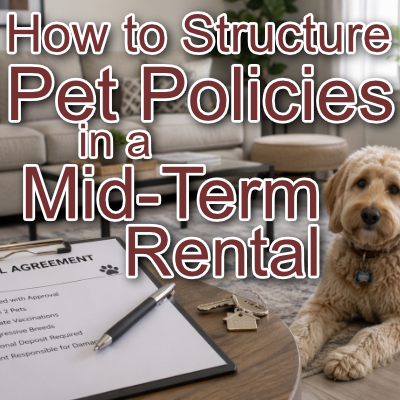
Pet policies in mid-term rentals require more nuance than traditional 12-month leases.
Furnished properties introduce additional concerns:
-
Upholstery and fabric damage
-
Allergen retention
-
Increased cleaning turnover
-
Future tenant sensitivities
A well-structured pet policy protects your property while remaining fair to traveling professionals.
1. Decide Whether Pets Are Allowed
Start by defining your baseline:
-
Fully pet-free property
-
Case-by-case approval
-
Open to pets with restrictions
Some owners choose pet-free policies because:
-
Future tenants may have allergies
-
Furniture and soft surfaces retain dander
-
HOA rules prohibit animals
There is no single correct choice — but clarity is essential.
2. Understand Furnished Rental Risk
In furnished mid-term rentals, pets may impact:
-
Sofas and upholstered chairs
-
Mattresses
-
Carpets and rugs
-
HVAC systems
Unlike unfurnished rentals, you are protecting more than walls and flooring.
That’s why deposits and cleaning clauses matter more.
3. Structure Deposits Properly
There are three common structures:
Refundable Pet Deposit
Held against damage and excessive cleaning.
Non-Refundable Pet Fee
Covers expected additional cleaning.
Hybrid Structure
Partially refundable deposit + small non-refundable fee.
Make the structure clear in writing.
Avoid vague language like “extra cleaning may apply.”
Be specific.
4. Define Acceptable Use
Your lease should specify:
-
Breed or weight restrictions (if any)
-
Maximum number of pets
-
Vaccination requirements
-
Crate training expectations (if applicable)
-
Prohibited damage (scratching, chewing, etc.)
Clarity reduces disputes.
5. Address Allergen Considerations
If you operate multiple furnished rentals, consider:
-
Whether some units remain pet-free
-
Whether deep-clean protocols are required after pet stays
-
Whether you disclose prior pet occupancy
Some tenants specifically search for pet-free housing due to allergies.
Transparency protects long-term occupancy.
6. Require Disclosure Before Move-In
Mid-term leases should require written pet disclosure before occupancy.
This prevents:
-
Unauthorized animals
-
Surprise allergen exposure
-
Lease violations
Explicit language in the lease is critical.
7. Cleaning & Turnover Planning
If allowing pets:
-
Budget for deeper cleaning
-
Consider carpet cleaning after each pet stay
-
Account for additional maintenance time
Factor this into pricing and deposit structure.
Final Thoughts
A thoughtful pet policy balances:
-
Property protection
-
Tenant flexibility
-
Future occupant health considerations
Mid-term rentals operate on trust and professionalism.
Clear expectations — in writing — reduce friction for everyone involved.