
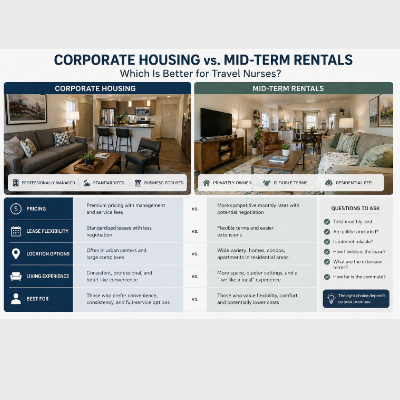
Corporate Housing vs Mid-Term Rentals: Which Is Better for Travel Nurses?
Travel nurses often encounter two common housing options: corporate housing and mid-term rentals.
At first glance, they may seem similar. Both offer furnished accommodations and flexible lease terms.
However, there are important differences in pricing structure, flexibility, and tenant experience.
Understanding these differences can help you make a more informed housing decision for your next assignment.
What Is Corporate Housing?
Corporate housing typically refers to professionally managed, fully furnished apartments designed for:
-
Business travelers
-
Relocating employees
-
Temporary contract professionals
These properties often:
-
Include utilities
-
Provide housekeeping options
-
Offer standardized furnishings
-
Operate under corporate lease structures
Corporate housing is structured for consistency and convenience.
What Is a Mid-Term Rental?
Mid-term rentals are furnished properties offered for stays typically lasting:
-
1 to 6 months
They are often:
-
Privately owned
-
Flexible in lease terms
-
Located in residential neighborhoods
-
Designed for contract professionals such as travel nurses
Mid-term rentals prioritize flexibility and local residential living.
Key Differences to Consider
1. Pricing Structure
Corporate housing often includes:
-
Premium pricing
-
Management fees
-
Standardized service charges
Mid-term rentals may:
-
Offer more competitive monthly rates
-
Include utilities in a bundled price
-
Provide negotiation flexibility
For longer contracts, pricing differences can become significant.
2. Lease Flexibility
Corporate housing leases are typically:
-
Structured
-
Standardized
-
Less negotiable
Mid-term rental agreements may:
-
Allow flexible extension
-
Offer customizable lease lengths
-
Provide more direct communication with owners
Flexibility can matter if assignments extend or change unexpectedly.
3. Location Variety
Corporate housing often clusters in:
-
Urban centers
-
Large apartment complexes
-
High-demand metro areas
Mid-term rentals can include:
-
Single-family homes
-
Condos
-
Smaller apartment units
-
Residential neighborhoods
Your lifestyle preferences may influence which feels more comfortable.
4. Living Experience
Corporate housing offers:
-
Consistency
-
Professional management
-
Hotel-like convenience
Mid-term rentals often provide:
-
Quieter residential settings
-
More space
-
Personalized communication
-
A “live like a local” experience
Neither is inherently better — it depends on your needs.
Which Is Better for Travel Nurses?
The answer depends on:
-
Budget
-
Desired flexibility
-
Contract length
-
Personal comfort preferences
-
Proximity to hospital
If you prefer standardized convenience, corporate housing may appeal to you.
If you value flexibility, residential comfort, and potentially lower monthly costs, mid-term rentals may be the better fit.
Questions to Ask Before Choosing
Before committing to either option, confirm:
-
Total monthly cost
-
Utility inclusion
-
Internet reliability
-
Lease flexibility
-
Extension terms
-
Commute distance
Clarity matters more than terminology.
Final Thoughts
Both corporate housing and mid-term rentals serve contract professionals effectively.
The right choice depends on your priorities — stability, cost control, flexibility, or convenience.
By understanding the structural differences between the two, you can choose housing that supports your assignment rather than complicates it.
Find a comfortable place you can call home during your travel nurse contract.