
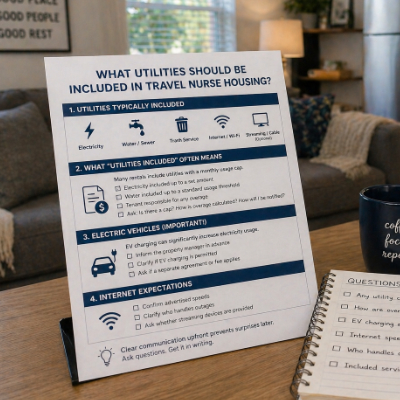
When signing a mid-term lease for a travel nurse assignment, utilities can be one of the most misunderstood parts of the agreement.
Most furnished rentals advertise “utilities included,” but what that actually means varies.
Understanding what should be included — and what to clarify — can prevent billing surprises later.
1. Utilities Typically Included
In most mid-term furnished rentals (8–13 weeks), the following are commonly included:
-
Electricity
-
Water and sewer
-
Trash service
-
Internet / Wi-Fi
-
Basic streaming or cable (optional)
Gas may also be included depending on the region and property type.
Inclusion simplifies billing and makes budgeting easier for short assignments.
2. What “Utilities Included” Often Really Means
Many landlords include utilities with a monthly usage cap.
For example:
-
Electricity included up to $150 per month
-
Water included up to a standard usage threshold
If usage exceeds that cap, the tenant may be responsible for the overage.
This protects property owners from unusually high consumption while still offering predictable pricing for typical use.
Always ask:
-
Is there a cap?
-
How is overage calculated?
-
How will I be notified if I exceed it?
3. Electric Vehicles (Important and Often Overlooked)
If you drive an electric vehicle, this becomes especially important.
Charging an EV at home can significantly increase electricity usage — sometimes by $50–$150+ per month depending on frequency and battery size.
Many leases assume “normal residential usage,” which typically does not include daily EV charging.
If you plan to charge an electric vehicle at the property:
-
Inform the property manager in advance
-
Clarify whether EV charging is permitted
-
Ask if a separate agreement or fee applies
Being transparent prevents misunderstandings and protects your relationship with the property owner.
4. Internet Expectations
Reliable Wi-Fi is not optional for most travel nurses.
Before signing:
-
Ask for advertised speeds
-
Confirm router placement
-
Clarify who handles outages
-
Ask whether streaming devices are provided
Strong internet matters for charting, video calls, and staying connected with family.
5. Climate Control & Seasonal Costs
In extreme climates, electricity or gas bills can spike due to:
-
Heating in winter
-
Air conditioning in summer
If your assignment falls during peak temperature months, confirm:
-
What the historical utility average is
-
Whether seasonal adjustments apply
6. Cleaning & Maintenance
Utilities are separate from:
-
Cleaning fees
-
Lawn maintenance
-
Snow removal
Clarify which services are included and which are tenant responsibilities.
7. Best Practice Before Signing
Before signing a lease:
-
Request a written utility breakdown
-
Confirm caps in writing
-
Ask how overages are billed
-
Disclose any atypical usage (EV charging, additional occupants, etc.)
Clear expectations upfront prevent friction later.
Final Thoughts
Most travel nurse housing includes utilities for simplicity and predictability.
However, understanding caps, seasonal usage, and special circumstances — like electric vehicle charging — helps protect both tenant and property owner.
Transparent communication makes mid-term rentals smoother for everyone involved.
Find your next furnished rental.