
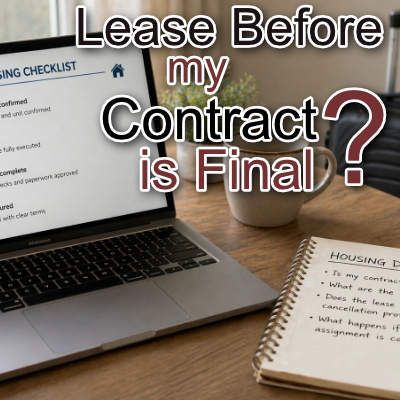
Travel nurse contracts move fast.
Housing markets can move even faster.
It’s common to feel pressure to secure a furnished rental before your hospital contract is fully finalized.
But signing too early can create financial risk.
So what’s the right move?
The answer depends on timing, contract certainty, and lease structure.
1. Understand Contract Risk
Before signing a lease, consider:
-
Has your hospital formally confirmed your assignment?
-
Is your contract signed by both parties?
-
Are background checks and credentialing complete?
-
Could the hospital cancel before your start date?
While cancellations aren’t common, they do happen — especially during fluctuating staffing demand.
Signing housing before your contract is secure increases exposure.
2. What Happens If Your Assignment Is Canceled?
If you sign a lease and your contract falls through, you may be responsible for:
-
A full lease term
-
A 30-day notice requirement
-
Partial forfeiture of deposit
-
Early termination fees
Unless your lease includes cancellation protection, housing contracts do not automatically adjust to hospital decisions.
Always review early termination language carefully.
3. When It Might Make Sense to Sign Early
In competitive markets, waiting can reduce inventory.
You may consider signing early if:
-
Your contract is fully executed
-
The hospital has a strong history of assignment stability
-
The lease includes a cancellation clause
-
The landlord offers flexible terms
Some landlords understand healthcare contract risk and may offer reasonable notice clauses.
4. Strategies to Reduce Financial Risk
If you feel pressure to secure housing before final confirmation, consider:
-
Asking for a lease contingency clause tied to contract start
-
Negotiating a reduced early termination penalty
-
Requesting a shorter initial commitment (30-day minimum)
-
Clarifying deposit refund terms in cancellation scenarios
Everything should be documented in writing.
Verbal assurances are not protection.
5. Consider Temporary Housing First
In uncertain situations, some travel nurses:
-
Book short-term stays (1–2 weeks) initially
-
Secure month-to-month rentals
-
Extend housing after confirming assignment stability
This may cost slightly more upfront but reduces exposure to large penalties.
6. Communicate Clearly With the Property Manager
Professional landlords appreciate transparency.
If your contract is not fully finalized:
-
Say so
-
Ask about flexibility
-
Discuss contingency options
Clear communication often leads to better solutions than last-minute cancellations.
7. The Balanced Approach
The safest path is:
-
Signed hospital contract
-
Credentialing completed
-
Written lease with clear cancellation terms
Avoid letting housing urgency override contract security.
Mid-term rentals should support your assignment — not create financial stress.
Final Thoughts
In most cases, it’s best to wait until your travel contract is fully executed before signing a lease.
If you must sign early, reduce risk through:
-
Written contingencies
-
Clear early termination clauses
-
Transparent communication
Travel assignments come with enough variables.
Your housing should not add unnecessary uncertainty.